 Centre for Airway, Face & Sleep Medicine
Posture, Breathing & Growth
Posture and airway balance play a key role in healthy development and breathing efficiency.
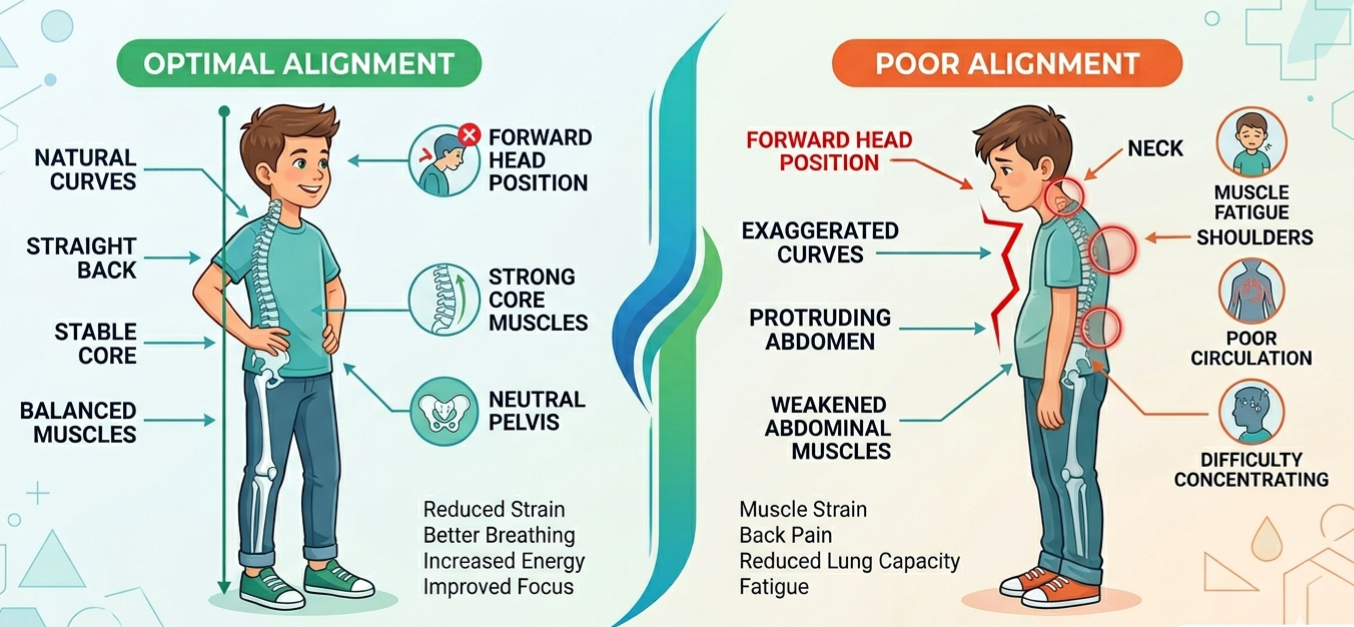
Posture and airway function are closely connected — a child’s posture reflects how they breathe, grow and develop over time.
Centre for Airway, Face & Sleep MedicineWhat is Normal Posture?
Good posture develops naturally when breathing, muscle balance and growth are functioning well together.
Head aligned over shoulders
Tongue resting on the palate
Lips gently closed at rest
Breathing through the nose
What Affects a Child’s Posture?
Postural imbalance often develops due to underlying functional and structural factors — not just habits or sitting positions.
Airway & Breathing
- Mouth breathing
- Nasal obstruction
- Allergies & congestion
Tongue Function
- Tongue tie (restricted movement)
- Low tongue posture
- Poor oral muscle function
Jaw & Bite
- Narrow upper jaw
- Improper bite alignment
- Altered facial growth
Fascia & Muscle Chain
- Tension through neck & jaw
- Muscle imbalance
- Whole-body compensation patterns
How Postural Changes Develop
Posture often changes gradually as the body adapts to breathing and functional challenges.
Posture Reflects How the Body Adapts
Subtle changes in head and neck position can indicate how the body is compensating for breathing and functional challenges.
The Body is Connected Through Fascia
Fascia is a continuous network of connective tissue that links the tongue, jaw, neck, and spine — allowing tension in one area to influence the entire body.
Tongue & Jaw Connection
Restricted tongue movement can influence jaw position and muscle balance.
Neck & Spine Link
Tension from the jaw and airway can transfer into neck posture and spinal alignment.
Whole Body Integration
The fascial system connects multiple regions, creating compensation patterns across the body.
Signs You Should Not Ignore
These subtle changes may indicate deeper airway and postural imbalance.
Is Posture a Sign of Something Deeper?
Postural changes are often the body’s way of adapting to breathing and functional challenges. Early evaluation can help guide better growth and development.